What the numbers mean — and the duty behind them.
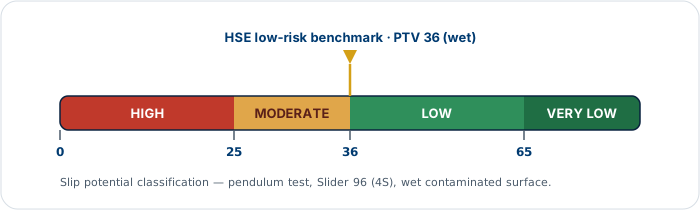
The HSE reads slip potential directly from the Pendulum Test Value. These bands were calibrated against real slip-accident data and are the same figures used in UKSRG guidance and relied on in court.
| Pendulum Test Value (wet) | Slip potential |
|---|---|
| 0 – 24 | High |
| 25 – 35 | Moderate |
| 36 and above | Low |
The 36 benchmark
A floor at a wet PTV of 36 or above is generally treated as low slip risk — roughly a one in a million chance of a slip. Below 36 the risk climbs steeply and further assessment is needed; below 25 it is a known hazard. The scale isn't linear, so a few points near the threshold matter.
Slopes and vulnerable users
Ramps, sloped approaches and areas used by the elderly or less able need a target above 36, rising with the gradient. We set the right target for each area in the report.
The legal backdrop
No statute names the pendulum, but the duty to assess and control slip risk certainly is — under the Health and Safety at Work etc. Act 1974, the Management of Health and Safety at Work Regulations 1999, and the Workplace (Health, Safety and Welfare) Regulations 1992, whose regulation 12 requires floors not to be slippery to the point of risk. A pendulum report is the recognised way to evidence those duties.